An Arab in the Promised Land
Arab Ministry
I was born into a Christian Arab family in Nazareth and grew up there. My mother was Catholic, my father Greek Orthodox.
The Christian Arab community is largely nominal and made up of various high-church streams such as Coptic, Catholic, Armenian, Maronite, Orthodox, etc. In Arab culture, you are born into whatever religion your parents were. If your parents are Muslim, you are Muslim. If your parents are Christian, you are Christian.
There was a Baptist church in Nazareth that had actually been planted by one of our distant relatives. But in Nazareth, Evangelicals in general were outsiders. Their New Testament was different, and they wouldn’t pray to Mary and the saints. They baptized only upon a profession of faith rather than as infants, and they had strange services that were unpredictable because they didn’t use liturgy. So, everyone in our community viewed Evangelicals as a crazy, pitiful off-branch of Christianity.
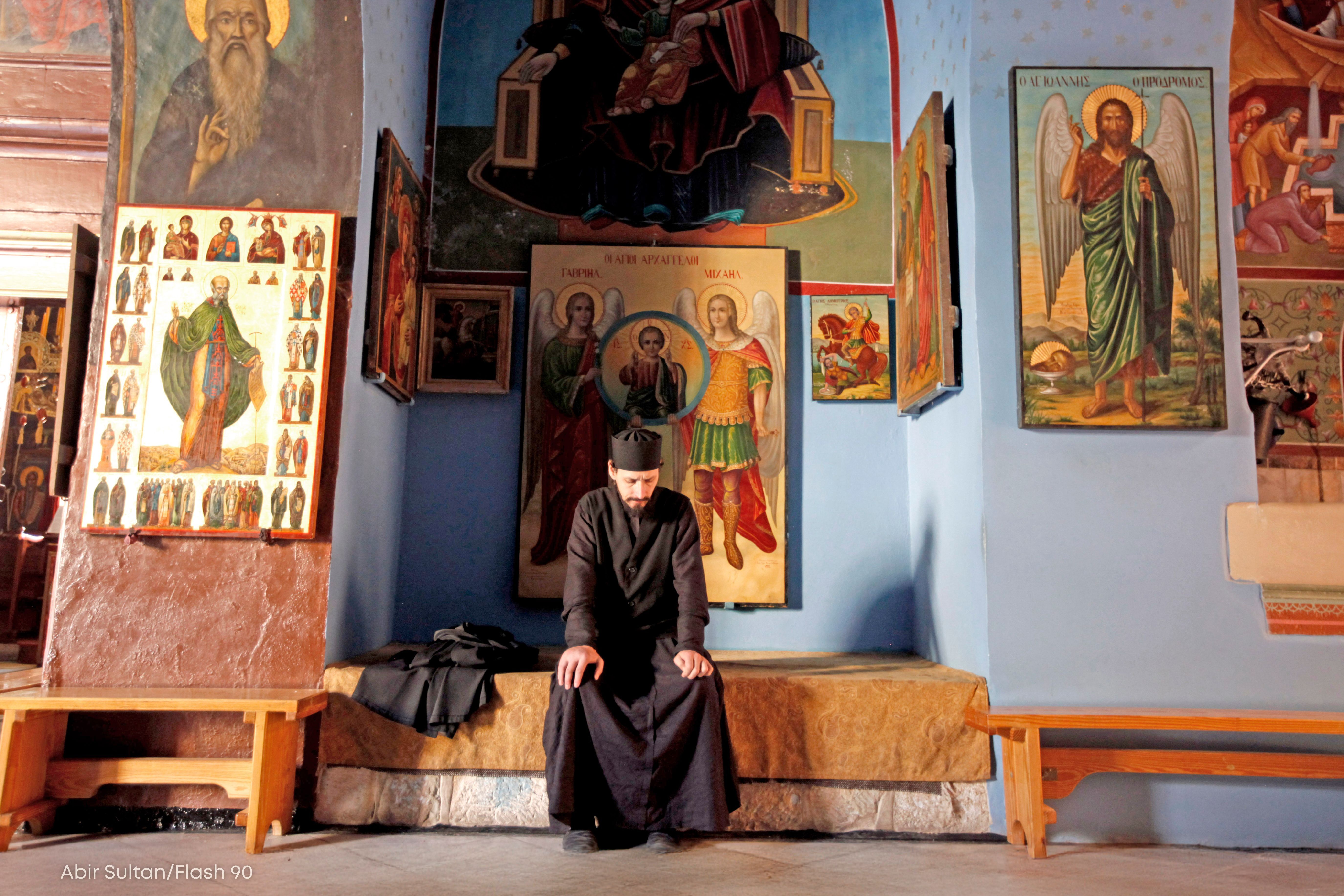
We celebrated Easter, Lent and a variety of Saint holidays. And Christmas we celebrated twice each year, because my parents’ churches had different traditions. On December 25th, we visited my mother’s Catholic family, and then January 6th, we celebrated with my father’s Greek Orthodox family. And yes, we got presents both times!
We knew nothing of the Jewish holidays. They were only relevant to us when roads would be closed for holiday parades (which meant some of the kids in my class wouldn’t have a way to get to school).
While Nazareth is an entirely Arab population, the city of Nazareth Illit (Upper Nazareth) is a mixed community of Jews and Arabs. I never knew any of them but vaguely remember hearing that some were Ethiopians and others were Russians.
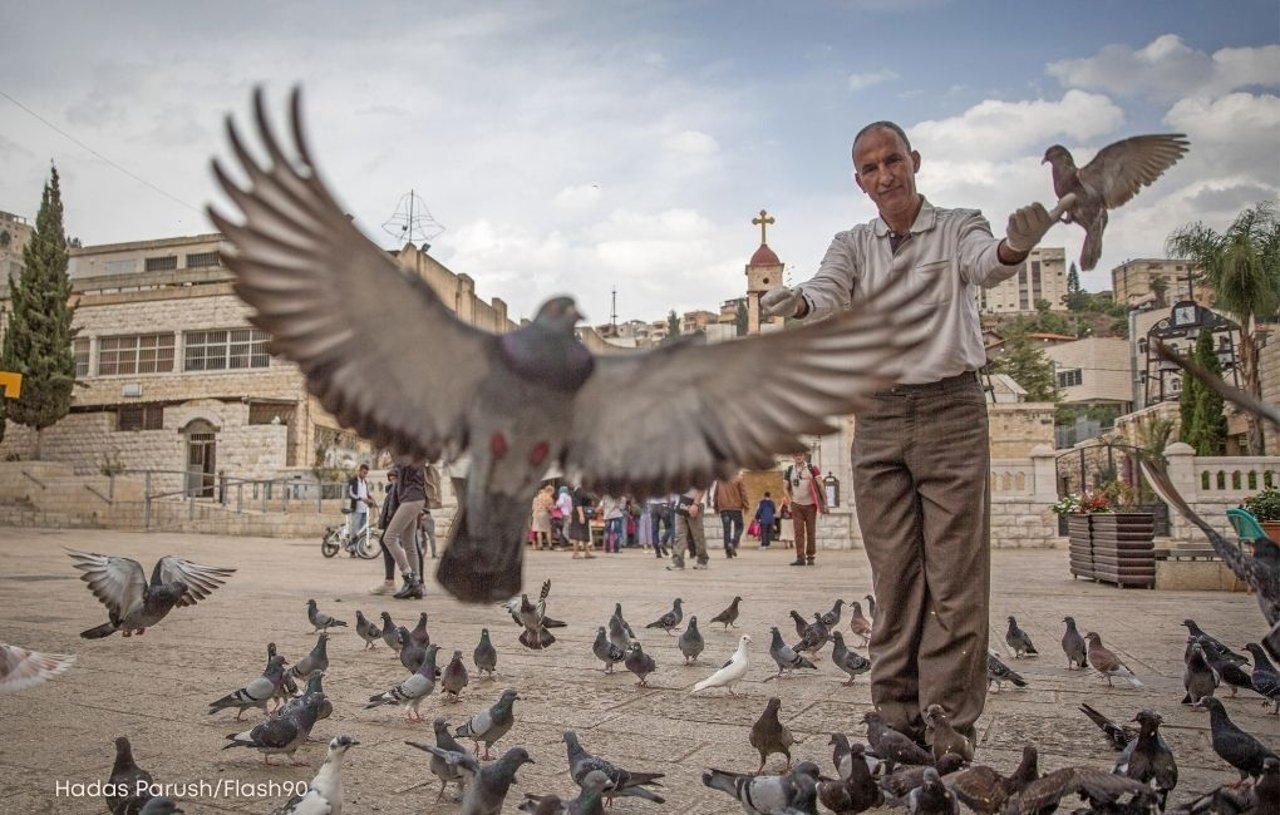
Nazareth is an entire world to itself. In fact, if you wanted to live your entire life, work, raise a family and not leave your neighborhood—you could. I spent my entire childhood in Nazareth, only occasionally traveling abroad to visit family or to Haifa, to go to the beach.
So, when I finally ventured out after high school, I felt like a tourist in my own country. On paper, Israeli Jews and Arabs are the same. Our taxes, healthcare, utility companies and other basic rights are the same. I understood enough Hebrew to get around. But, the popular TV shows, nationally beloved songs, music artists, and inside cultural jokes—I didn’t know any of them. I found when I met Syrians, Lebanese and other Middle Easterners, I had more in common with them even though they lived in a different country. So when I see Israeli Arabs step into Jewish circles in Israel, I appreciate the frustration they can feel because culturally we are so different. I also understand why sometimes they eventually leave.
The Miracle that Changed Everything
When I was a teenager, our family witnessed a sudden and supernatural healing of a terminal illness in our extended family. It was then and there that my parents and siblings realized Jesus wasn’t just a cultural fairytale. He was real and He wanted to be a part of our lives. And so, my entire immediate family became what the West calls “born again.”
From that point on, we took our faith seriously. It was a Baptist pastor who had walked through the family miracle with us and so we began attending his Baptist church. His church was small and he did not have musicians. So, the worship part of the service was just playing prerecorded CDs.
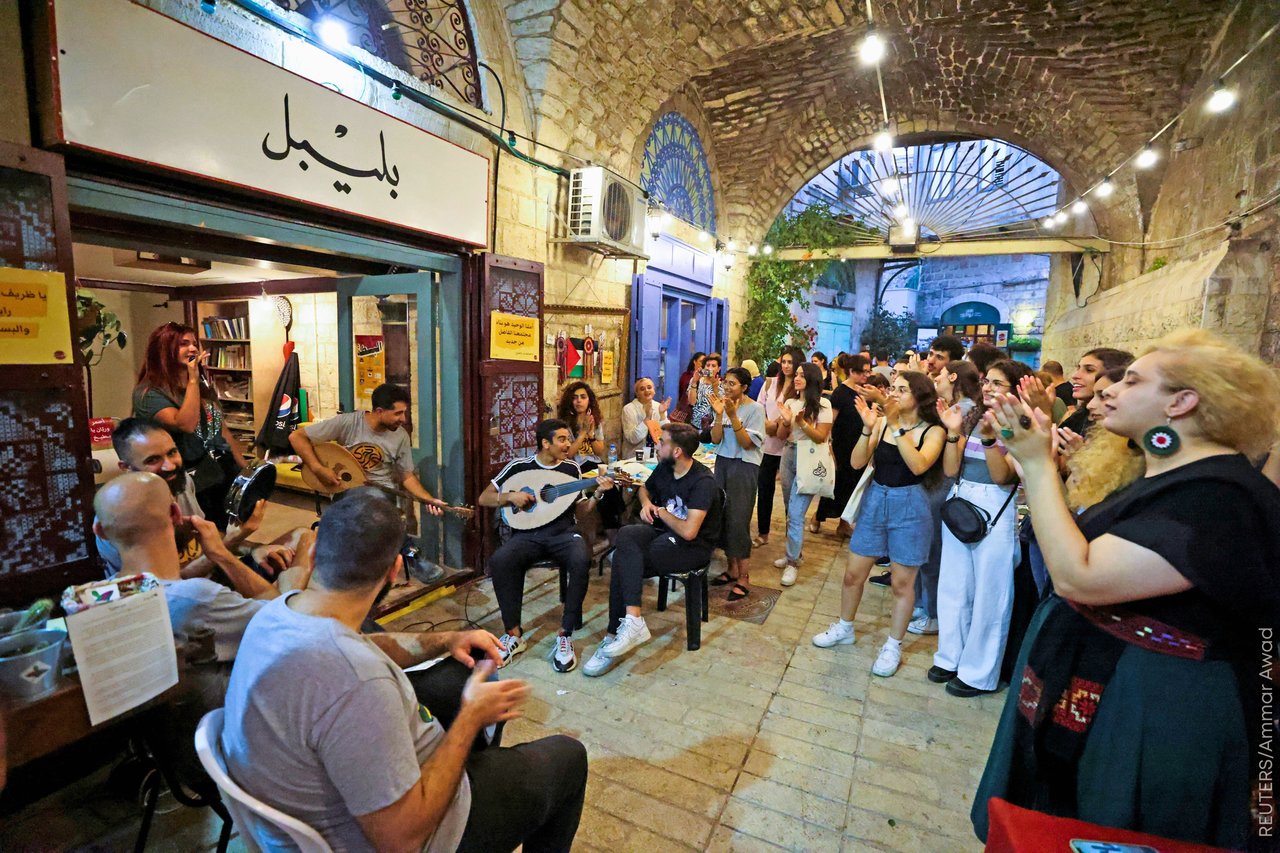
Since we have always been a musical family, we naturally filled in the musical needs and became the worship team. All these changes resulted in a lot of raised eyebrows and many arguments with friends and extended family. I wouldn’t say they ostracized us, but we now saw the world differently, so our shared experiences weren’t the same.

Below: "Raise Us Up" Worship video filmed at Dor Haba conference with Illit Ferguson, Siyonna and Zack in Hebrew, English and Arabic.
Soon after, my oldest brother heard about some youth conferences and attended several. That was the first time any of us would meet Messianic Jews. I remember the state of confusion each of us experienced as we wrestled through the idea of Jews who believed in Yeshua. “What do Jewish people have to do with us Christians?” we would ask each other. To us, being a Jew meant you believed in Moses, not Jesus.
We had heard the Christmas story dozens of times, but neither us nor our parents had any idea Yeshua was Jewish and that the Bible was written by Jews. In Nazareth today, I would say most Christian Arabs know nothing of the connection between Jews and Yeshua.
Israeli Worship
I was still in high school when all this was happening, so I wasn’t processing this theologically. I was first impacted by the Israeli worship.
By now, my brother was being asked to play at a bunch of conferences, and he would come home and practice the songs on the piano. I was mesmerized by the chord progressions and melodies. At home, we were exposed to Western pop music and as musicians, we enjoyed listening to movie soundtracks. But in the world of Nazareth, everyone listened to Middle Eastern music. I had only ever heard Middle Eastern style worship and was fascinated when I heard Israeli Jews singing worship songs—in Hebrew and with a Western sound.
When I completed high school, I wanted to study music production, recording and composition. I especially wanted to study the Western sound and found a four-year music school in central Israel. It was hours away from Nazareth, but I met a believing Jewish couple named Ari and Shira Sorko-Ram who invited me to stay with them while I was studying.
As we developed more relationships with Jewish believers and Evangelical Christians from abroad, we were often asked to participate in conferences and even international music tours.
Two significant things happened during this time.
FIRST: Old Man’s Advice
At some point, I noticed my brother began turning down invitations to conferences. While we would gladly play in services or conferences for the love of God and music, we were often highlighted as the token Arabs in a pro-Israel setting. We had gone through a significant change in our faith before the Lord and enjoyed our common faith with Jewish believers and Evangelicals, but we had never really sat down and processed our identity as Israeli Arabs.
If you talk to the older men in Nazareth, they will explain to you that the issue of the Arab identity in Israel is more about stability than ideology. The Middle East is historically an unstable region and therefore, choosing a side is dangerous. If you go back a mere 100 years, this region has been ruled by the Ottoman Empire (Muslim), then the British Empire (Christian) and now Israel (Jews).
It is not uncommon historically for a new ruling power to kill off any perceived competition in a conquered area, to better control the population. Just in the past year, this happened when Syria fell and a mass slaughter ensued. And in Gaza, just recently when the ceasefire was declared, Hamas emerged from the tunnels and killed off hundreds of Gazans from competing gangs.
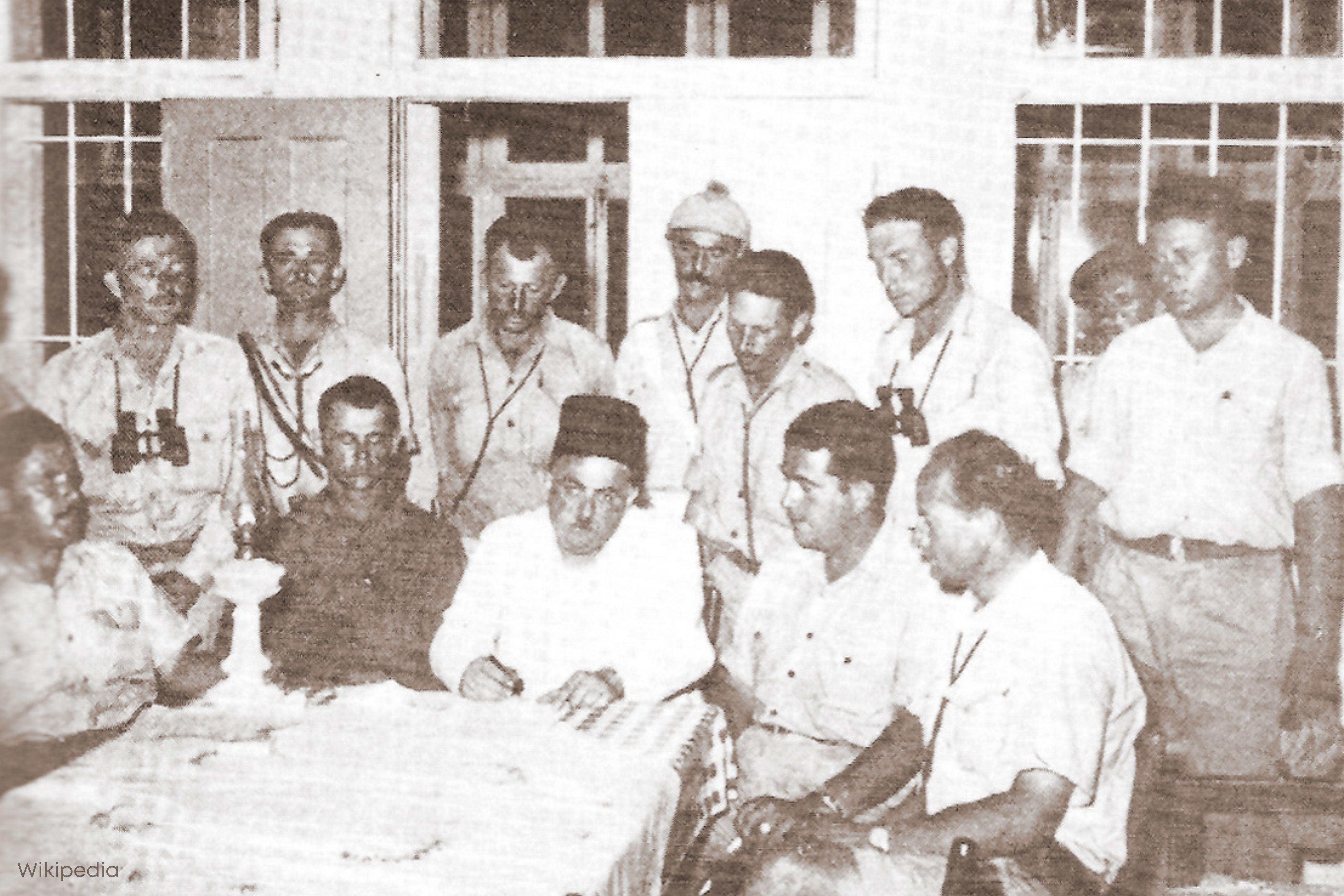
In the late 1940s, when Israel’s army arrived at the doorstep of Nazareth’s mayor, Yusuf Fahoum, they asked him a simple question, “Do you want to fight, or will you surrender?” Yusuf is credited for saving Nazareth that day by surrendering and accepting Israel’s sovereignty over the land. Today, Nazareth is a thriving Arab city whose residents have full rights as Israeli citizens. But to most of the Arabs there, this “Israeli generosity” is only relevant so long as the Jewish state exists.
In our upbringing, Jews had nothing to do with our Christian identity. We never saw them as believing in the same God as we did, so none of us understood Israel’s reestablishment as a fulfilled promise from our God.
Besides, choosing to support Israel and serving in its army would mean fighting against our own Arab people. On the other hand, choosing the “Palestinian” ideology meant you had to hate Jews and embrace a narrative that supports terrorism and violence. Both were extreme to us. Picking a side meant declaring war on the other side. Peace only existed amongst people who did not take a stand.
And so, our family, like most of our community, was taught in school to exist in the middle. The middle was a place where you held no political persuasion, no matter who ruled the land, and simply didn’t talk about it.
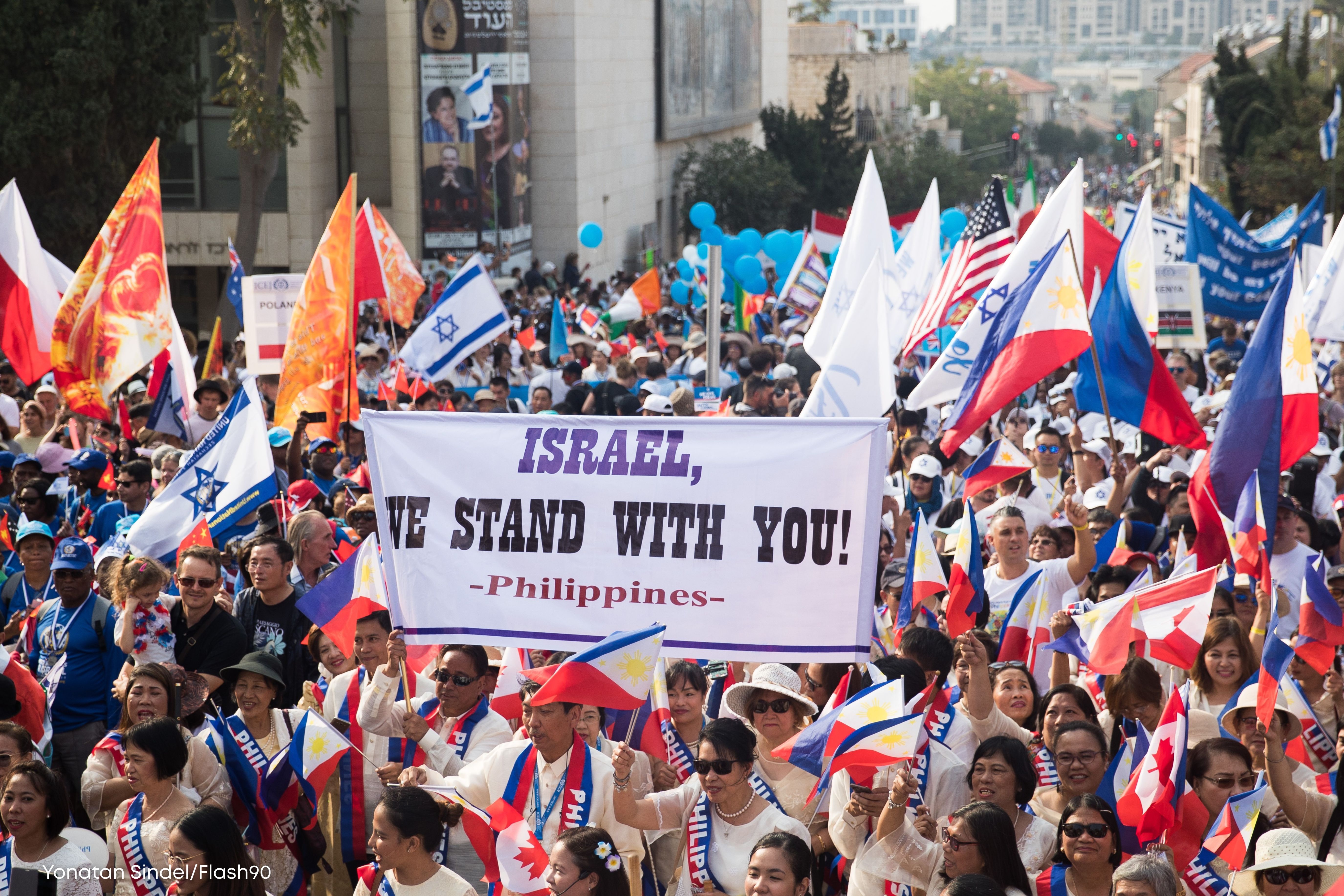
On the other hand, Jewish believers and especially Christians regularly made bold declarations of support for Israel as a nation. And so, when we would be asked, as part of a worship set at a conference, to play Israel’s national anthem with an Israeli flag behind us, it felt like we were being asked to take a public political stance, when we ourselves had never processed what we believed about the situation.
Besides that—our heart was to reach Muslims all over the Middle East with our worship, and branding us with pro-Israeli politics would close doors before we even knocked on them.
SECOND: One New Man
As my four years at the music academy were coming to a close, I realized even before I received my degree that I did not connect with the secular music industry.
In school, we wrote and produced some good songs for class projects. We were even given opportunities to get the songs we wrote on the radio and play on big stages with famous people. But it all felt empty and pointless. I was even offered to teach at the academy, but I didn’t like how the music industry was all about getting famous and making money.
I had loved music because I had experienced it in a worship setting. My father had raised us with the understanding that music was a sacred tool for worship. Therefore, I only ever wanted to create music to give glory to God, not solely to entertain people.
Around this time, I was staying with the Jewish couple.Ari began to talk to me about the One New Man spoken of in the Bible. His explanation of how we were all destined to be one before the Lord changed everything for me. Suddenly, uniting as Jews and Arabs was not only plausible—it was destiny.
City of Worship
It was a difficult realization that after four years of studying, I had no framework in the real world to use what I had learned. But I am not the type to sit still for long. So, I decided to apply for work in sales. My plan was to make money in a regular job so I would be able to make music on the side, the way I believed it should be done. I called my brother to let him know I had gotten a job and was moving to a nearby town. Our music would be put on pause for a while. His answer surprised me.
“Why don’t we try working with Maoz? We already have years of relationship and mutual trust with them. They value the sacredness of worship like we do. We are skilled musicians, we speak fluent Arabic, Hebrew and English and want to reach the Arab world with the Gospel. These are skills Maoz values.”
This was the conversation that changed everything. Maoz welcomed us in, and we took the reigns of everything that had to do with their Arab outreach. I had only been to Jerusalem once as a child and a few times as an adult to play music, but Nazareth was too far to drive daily. So, I packed up the world I knew and moved to this ancient City of Worship.
Eventually, my brother and his wife also joined the team and now we spend our days exploring new avenues to reach the Muslim world with the message that changed our lives. And of course, producing a blend of Middle Eastern and Western music for the glory of God.
Major vs. Minor
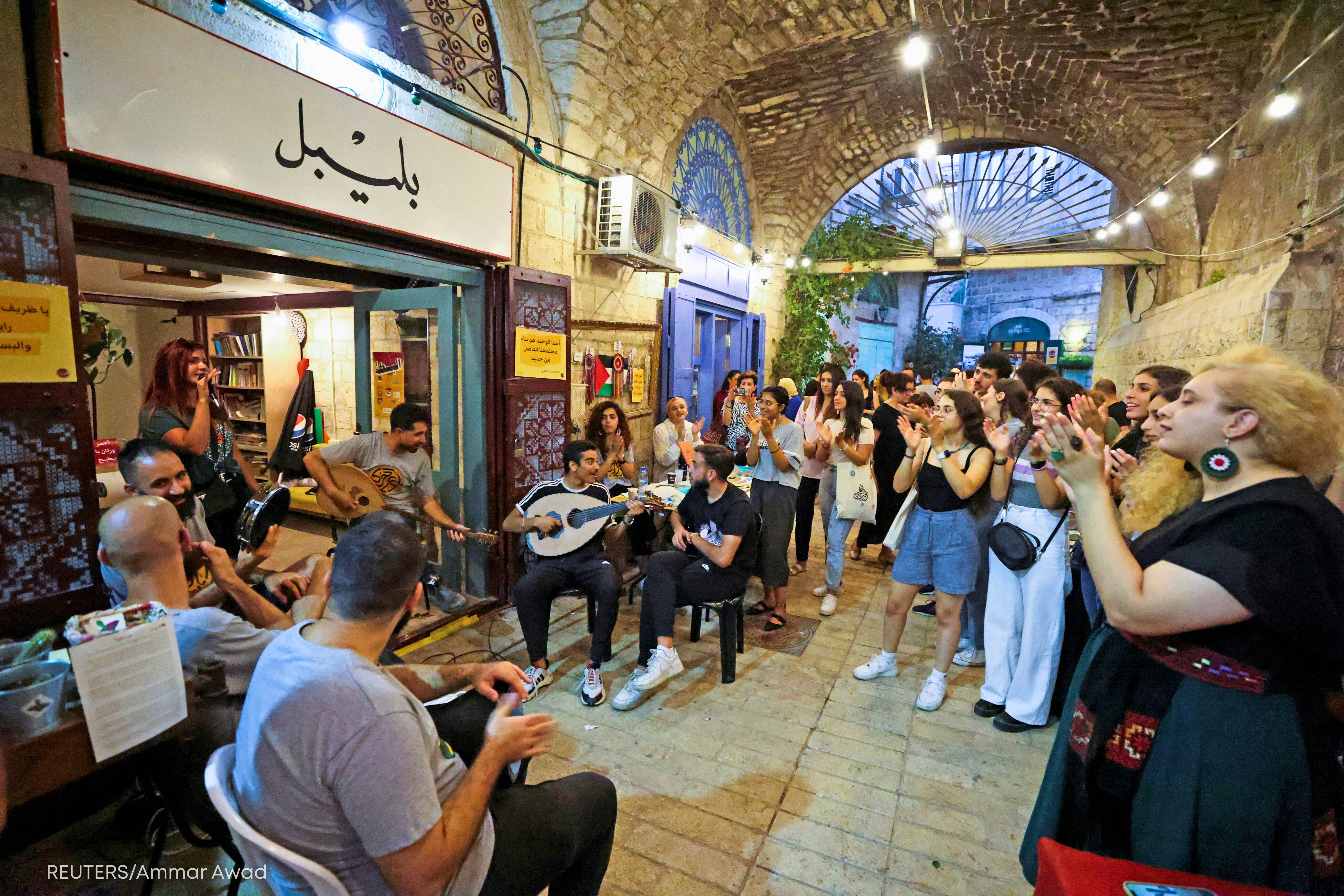
I grew up thinking I was part of the majority. I would see a few Jews eating at a restaurant in Nazareth and think that we, as Arabs, were the majority. When I left Nazareth, I realized Arabs were the minority in Israel. In the world beyond that, Christian Arabs are a minority in the Arab world. In fact, we are such a minority that many people think the words Arab and Muslim are synonymous. When we travel abroad to play our music, it’s not uncommon to be greeted by Muslim Arabs who came to hear us play because they had never met an Arab who wasn’t Muslim.
I could go back to the safe place that is Nazareth, where I am in the comfortable majority. But I can see something a lot of people around me can’t see. The Bible promises something greater than mere political agreements can offer. I see a place where the Gospel is able to unite Jews and Arabs in ways politics never could. I can see that together we can be a powerful force to change our world. And I believe I can be a bridge to help people get to that place.
The Bible is clear that the One New Man has one citizenship that matters. I believe in a future where there is less hate and more love for the King of the Jews, who was slain for the sins of the entire world. And perhaps it will mean redefining what it means to be an Arab in the Promised Land, an older brother in the story of the Jewish people.
I understand there is a price to pay—and the road to a paradigm shift can be a lonely one. But I am already part of a team that believes it can be done.
Ephesians 2:11-19
Consider this New Testament passage in context of the article you just read and the Middle East conflict. Gentiles simply means nations or people—and Arabs are one of these peoples spoken of here.
11 Don’t forget that you Gentiles used to be outsiders. You were called “uncircumcised heathens” by the Jews, who were proud of their circumcision, even though it affected only their bodies and not their hearts. 12 In those days you were living apart from Christ. You were excluded from citizenship among the people of Israel, and you did not know the covenant promises God had made to them. You lived in this world without God and without hope. 13 But now you have been united with Messiah Yeshua. Once you were far away from God, but now you have been brought near to him through the blood of Messiah. 14 For Christ himself has brought peace to us. He united Jews and Gentiles into one people when, in his own body on the cross, he broke down the wall of hostility that separated us. 15 He did this by ending the system of law with its commandments and regulations. He made peace between Jews and Gentiles by creating in himself one new people from the two groups… 17 He brought this Good News of peace to you Gentiles who were far away from him, and peace to the Jews who were near. 18 Now all of us can come to the Father through the same Holy Spirit because of what Yeshua has done for us. 19 So now you Gentiles are no longer strangers and foreigners. You are citizens along with all of God’s holy people. You are members of God’s family.

Stand With Israel’s Believers
Maoz Israel is bringing Yeshua’s truth to every corner of the Land. Your donation equips believers and reaches the lost—be a part of this eternal work today.