The Battle After the War
Active Shooter at Large!” The notification popped up on my phone screen.
Israel’s wall-to-wall political coverage leading up to our upcoming elections was abruptly interrupted by a report of a terrorist infiltration in Netanya, a coastal city north of Tel Aviv.
The updates came soon after: the alleged perpetrator was “neutralized” by local police. No other injuries were reported.
However, our collective sigh of relief quickly turned to horror as media reports began trickling in that the shooter’s name was David. He was an IDF soldier—a Border Police officer, two years into his mandatory service.
It says a lot about our reality in Israel that even without details, the first assumption for Israelis was not that he was a secret terrorist, but rather that he was suffering from PTSD.
Witnesses say David wandered through the neighborhood with his IDF-issued M16. Footage filmed from resident’s patios showed him eventually going into an adjacent orchard, and opening fire into the air.
Residents were understandably terrified and alerted the police as they ran for cover. The scene had all the indicators of a terrorist infiltration—though reports are that the IDF soldier did not attempt to injure anyone, despite roaming freely for 20 minutes before the police arrived.
Mental health advocates say he was having an episode—a battle flashback. Authorities argue he wasn’t in the system officially diagnosed with PTSD. Critics, in turn, argue that the military’s mental health system needs to adjust to our new reality of war-weary soldiers.
What Does Winning Look Like
The war of October 7th may have closed one chapter with the hostages’ return, but two areas remain very much unresolved:
1. The aftermath of trauma for both our soldiers and civilian population.
2. The existential threat of terrorists just across our borders that are actively planning for the next round.
Ignoring this reality because it’s difficult and complex will not make it go away.
Yes, we took out all the top leaders of Hamas and Hezbollah—and several layers of successors. And yes, we dramatically diminished the number of their weapons and fighters. But to Islamic ideology, people are expendable. To them, life should be dedicated to preparing for the glory of death, where rewards await the most radical followers. This is why nothing hinders them from anointing new leaders and openly declaring their plans for the next round of attacks.
For the rest of us, who aspire to live and love, the damage to the soul of our people, coupled with the exponential increase of international support for the Palestinian cause, continues to stare us in the face like a modern-day Goliath.
For Israelis, little has been achieved, except perhaps the return of the hostages and the beautiful monuments we have set up for our dead. And so, October seemed an appropriate month to bring you personal stories of real-life people who are wrestling with this reality.
Holding On
Even with the fighting still going on in Gaza and Lebanon (yes—Hamas and Hezbollah never actually stopped attacking and rearming), trauma diagnoses like PTSD have skyrocketed since the October 7th attacks. And those are just records of the ones actively seeking help. “The holy grail in PTSD is to find the correct treatment for the right person at the right time with the right caregiver,” Israeli mental health experts explain the urgency in the timing.
As Israelis, we have an unspoken rule when it comes to danger. Hold it together long enough to survive. We can cry and laugh about it together when it’s all over.
This is both good and bad. Good because that’s how we keep fighting until we can’t fight anymore. It’s also concerning because when the war is over, and we no longer have a tangible enemy staring us in the face, everything we have been holding inside can begin to fall apart.
Tragically, for some, like David, it is too late to help. But there are others we’ve been able to reach in time to begin the healing process—emotionally, mentally and spiritually. Out of gratitude, and in hopes of inviting others to understand the battle after the war, they have allowed us a glimpse into their souls. Though some parts of their story, of course, will remain confidential.
Soldier
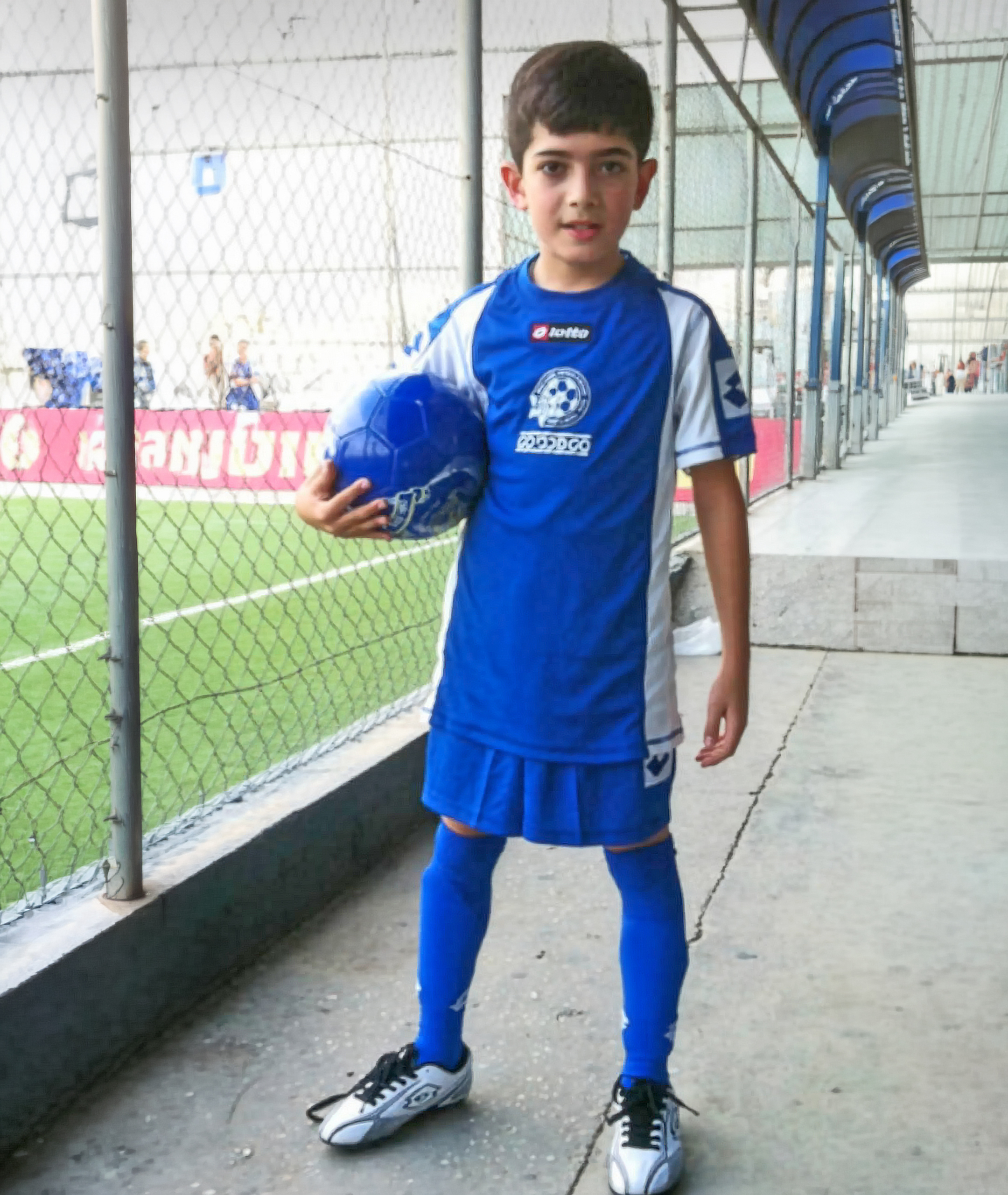
If you can believe it, Eitan had two things he loved in his young years—soccer and homework.
His weekly routine toggled between soccer practice and his studies—especially Spanish and psychology. He wrote articles for the school magazine and advocated for student rights on the student council. It was obvious to him—and everyone else—that he would one day pursue a career in media and journalism.
Of course, for Israelis, careers don’t begin after high school graduation. Army service does.
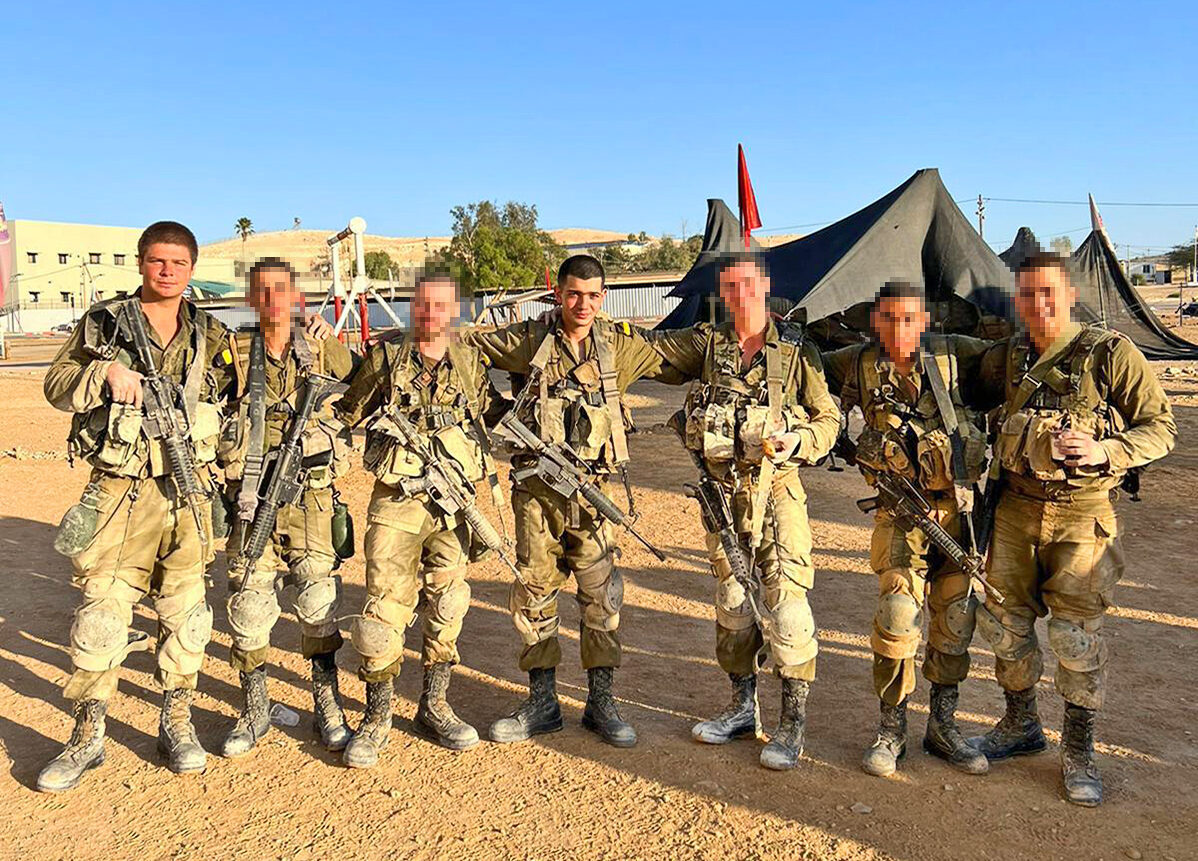
His family, originally from Azerbaijan, was very patriotic. His grandfather was killed fighting the Nazis in WWII—believing that one day Jews would have a safe place to live. And so, to Eitan’s family, being a combat soldier in the army that would protect that safe place was the most honorable thing a human could do.
When members of his family were drafted, it was to combat units. When it was Eitan’s turn, his parents uncharacteristically voiced concern. Eitan’s gifts were in communications, and so, it seemed like a happy median when the IDF informed him that he would serve in artillery forces. Field combat, but stationed within the borders of Israel.
The first year was relatively normal—boring even. His unit focused mostly on thwarting smugglers in Judea and Samaria, which requires very little firing of artillery.
The Day the World Died
It was the summer of 2023 when his world collapsed. There had been smatterings of terrorist attacks near where they were stationed. Their unit had been warned that the attacks could reach their checkpoint as well.
On August 31st, Eitan had completed his duty and was in his room preparing to go home for the weekend when his sister called. She was checking to see if he was OK because the news was reporting a terror attack at his checkpoint. Eitan ran out to find chaos and soldiers hysterically crying. It was his commander who came in minutes later with the news: One of Eitan’s closest friends in the unit had been killed.
The event hit Eitan hard. He would get up to prepare for a mission and couldn’t pick up his weapon—or even put on his uniform. The deep feeling of grief was accompanied by severe anxiety and depression.
When he shared his struggles with his commanding officers, he was given a month off to rest and scheduled to meet a mental health officer, a Kaban, for evaluation. Eitan went home in good spirits for the holiday weekend on October 6th. His evaluation was scheduled for Sunday, October 8th, 2023.
Duty Calls
Eitan hadn’t been home for 24 hours when he woke to the sirens of October 7th. His phone flooded with updates of terrorist infiltrations—and orders for his unit to report for duty. At first he hesitated. Would he be of any use in combat? Would he freeze? Become a liability to his fellow soldiers?
Eitan knew what his soul needed. But he also knew what his nation needed. This is what he had signed up for—to be there when it mattered. When October 8th came, he wasn’t in counseling, he was on the battlefield, weapon in hand. Within a week, his unit was fast- tracked to the northern border with the warning, “If we don’t guard our border with Lebanon, Hezbollah will bring us another October 7th.”
The fighting on the northern border was perilous. Soldiers had no bomb shelters in the open fields—only helmets and vests to protect them against RPGs and missiles. Death stared them all in the face and mocked them in their dreams at night.
In between battles, news trickled in. Eitan’s friends from other units had been lost in combat. Some were murdered at the Nova party. Others had been kidnapped into Gaza. There was no time to think. Only fight to survive. Eitan kept going—for more than a year, before the symptoms began.
In the midst of battle, many symptoms can be explained away—even ignored. Who has time for personal problems when you’re being shot at? Then Eitan started wetting the bed. At first, he would wake up early, change the sheets and go out with everyone else.
When it kept happening, he told his commanders who finally rescheduled that appointment with the Kaban. Eitan was then paired with a trauma therapist named Daniel who recognized the symptoms of PTSD. But Eitan was convinced he just needed to do a few sessions to calm his nerves.
A few weeks later, Eitan went home and someone slammed a door in the house. Eitan’s world exploded.
He was in Gaza. He was in Lebanon. Bombs were going off everywhere, soldiers were screaming—and so was he.
When he opened his eyes, he was back home, looking into the very concerned face of his mother. “You were yelling like you were in the middle of a war zone,” she told him. Eitan sluffed it off. “It’s just because I’m around that all the time so my mind is sensitive to sudden noises.”
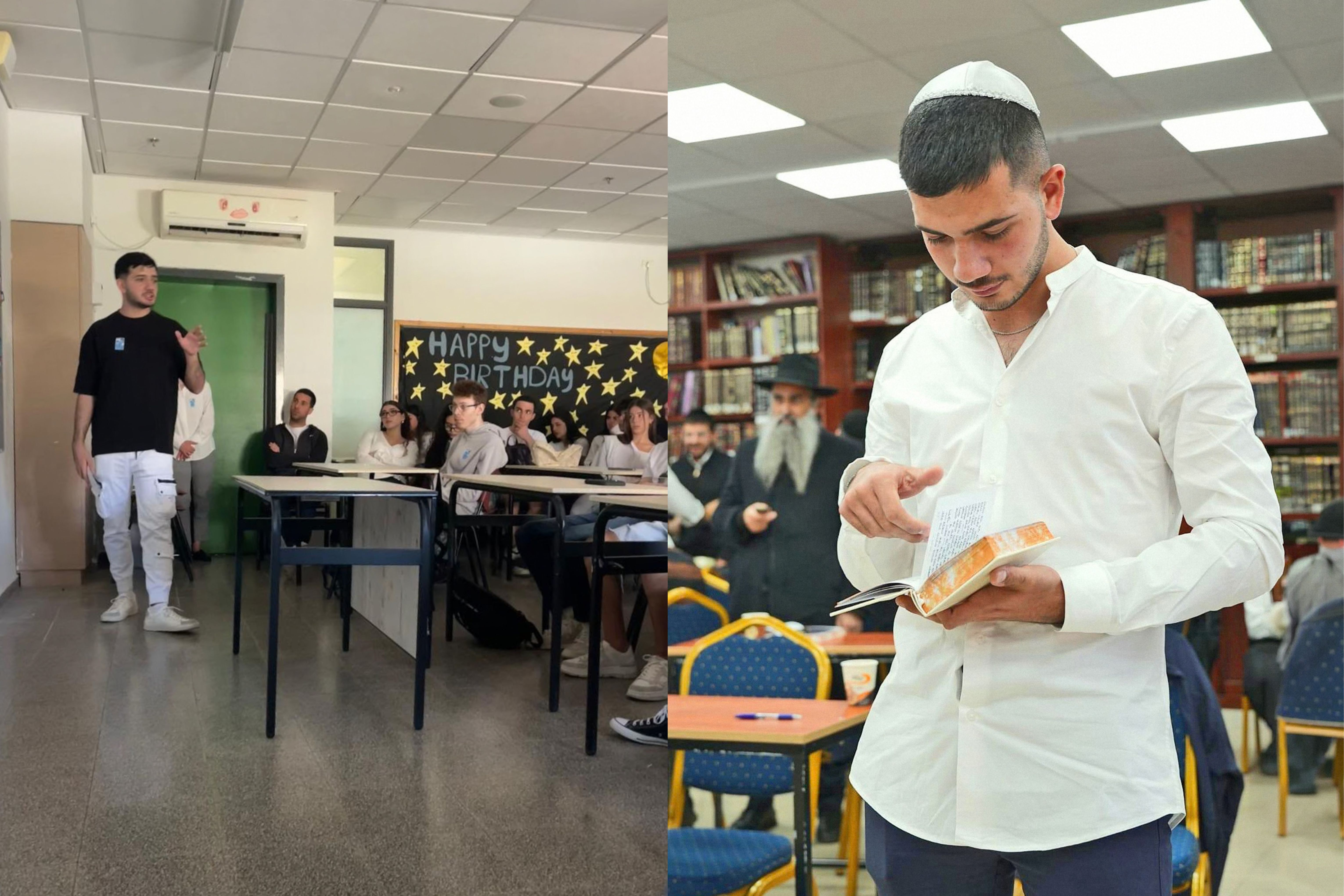
Upon completing his mandatory service, Eitan was released in the spring of 2025. He informed Daniel that he wouldn’t need treatment anymore since he was going back to civilian life and would no longer be under the mental stress of battle.
Fight or Flight
Two months after Eitan was released, Israel took on the head of the snake—Iran. Operation Rising Lion was a different kind of war because the threat was not simply to villages on the border of Gaza and Lebanon—it was anywhere Iran chose to aim a missile.
Anywhere. At anytime.
In just 12 days, Iran fired 650 ballistic missiles at Israel, the most ever fired on a nation in such a short span of time. Thankfully, most were intercepted in the air. But, the constant sirens kept everyone on hyper-alert day and night. And the magnitude of the explosions made thunder seem like firecrackers. And when one did land, it would take out half a dozen buildings on a street—including the bomb shelters inside them.
During these two weeks, Eitan—and many others like him—deteriorated significantly. He experienced panic attacks, vomiting and would collapse to the ground with flashbacks. When one episode almost resulted in admitting him to the hospital, Eitan finally understood he needed professional help. That’s when he went back to Daniel and was formally diagnosed with PTSD by a psychiatrist.
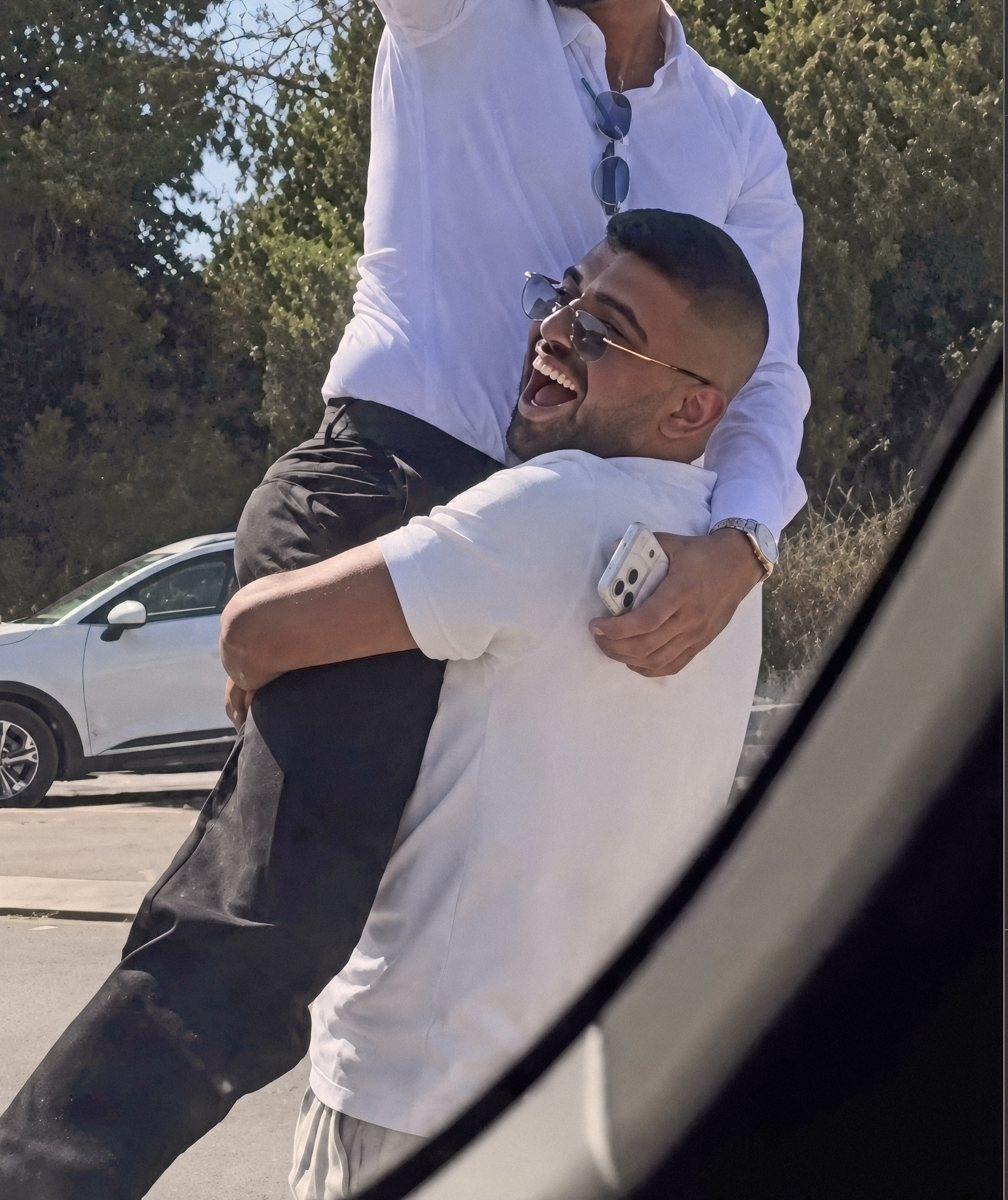
Eitan’s journey has had ups and downs. Recently, while out and about, he collapsed on the street with flashbacks from battle. No one around reached out to help him. Some even laughed and filmed him. Perhaps they assumed he was on drugs. For sure, it was not because Israelis, as a culture, don’t care.
Once he recovered, Eitan reached out to some friends to try and raise awareness among the public. Together, they set up a social experiment filming him collapsing just as he had a few months before.
This time, people around came to see how he was, but still didn’t know how to help him. Once a small crowd surrounded him, trying to figure out what was wrong. The friends explained they were reenacting a real-life scenario and proceeded to give tips on what to say and do in such events. The video was shared by many online and was featured on the news.
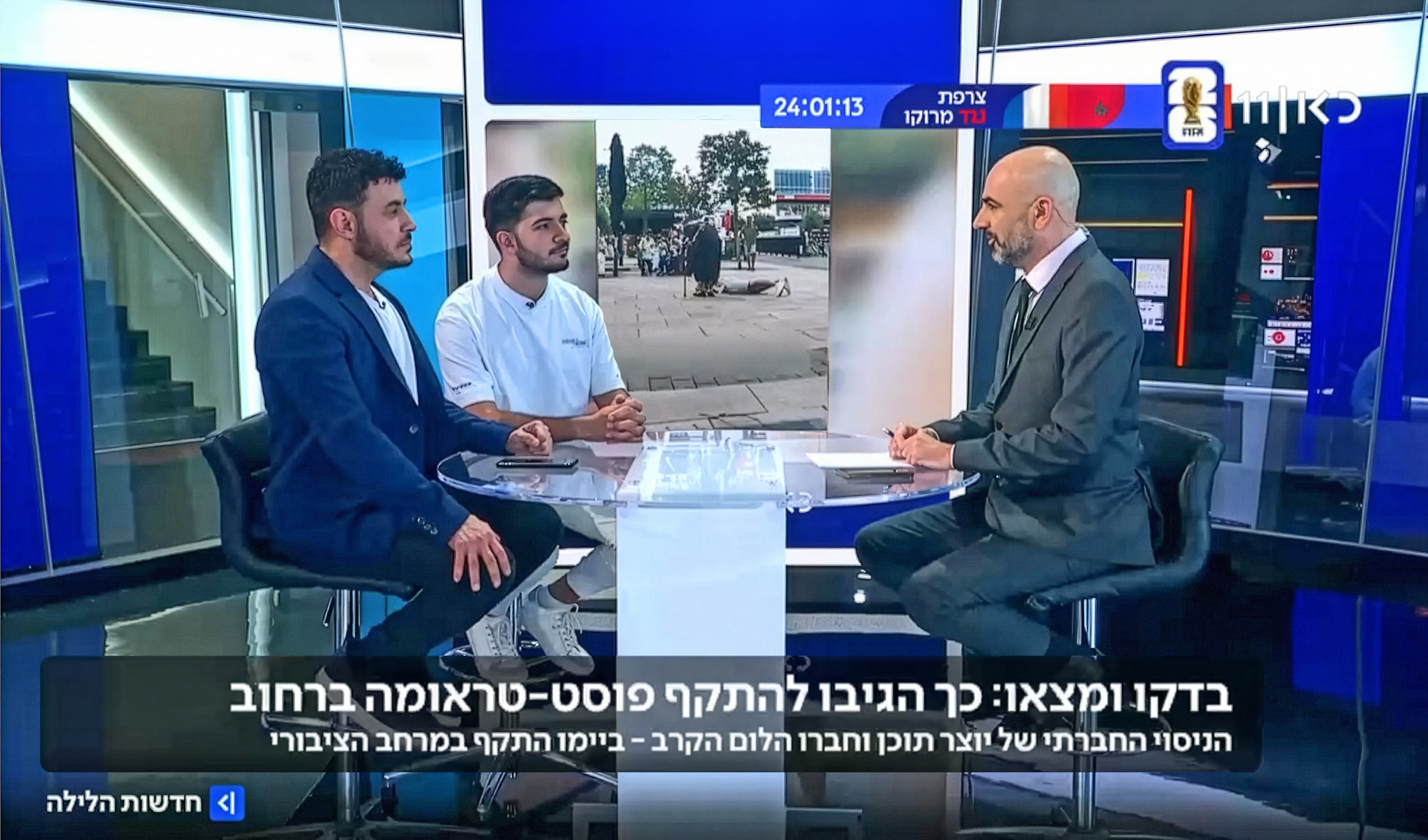
Eitan shares about his strong faith in the Lord and how God has worked so much for the good, “I used to think of PTSD as a terrible condition that limits me.” But as a gifted communicator, he now sees his condition enabling him to help so many others who don’t know how to describe what they are going through.
In a way he's come full circle pursuing his dream of being a journalist and advocating for the rights of those without a voice. It looks different than the original plan. But isn’t life like that?
Civilian
Bar’s story is different. But no less complicated.
From childhood, Bar and Liron were inseparable—lifelong soulmates destined to build a beautiful life together. Then the Nova festival happened. Liron could’ve escaped, but stayed behind to give first aid to the injured. That’s just who she was, and she was murdered for it.
Bar took her death hard. Didn’t sleep for a week. Didn’t smile for months. Then finally, found comfort in helping care for others in need. He organized care packages and meals to give to the needy during the war, in her memory. He occasionally broke down and wept bitterly over her loss, but then life would go on.
This summer, Bar’s brother finally tied the knot. Everyone was pleased to see Bar dance and celebrate at the wedding. Three days later, Bar was found dead at Liron’s grave.
We are in a race to find and identify wounded souls in the sea of everyday life. This summer, Israel’s government took legal steps to try and do just that. Still, it’s nearly impossible to create an official policy to spot trauma victims like Bar without the help of friends and family.

Bar wasn’t at Nova. He wasn’t traumatized on the battlefield. Neither was 9-year-old Tamar, whose heart simply stopped beating while hiding in a bomb shelter with her family. That is why, in a nation that experienced trauma on such a massive scale, teaching the public what to look for in their loved ones could help us reach those suffering in time to get them help.
Jacob’s Trouble
A recent study found 67% of people from 36 countries held negative opinions of Israel. I’m not sure what’s more striking—the percentage of haters—or the fact that so many people hold such strong opinions when they know very little about Israel, or the details of the controversies surrounding her existence.
If we are honest with ourselves, on paper, Israel seems more trouble than she’s worth.
Israel is a tiny country, with 10 million people. She represents only 0.01% of the world’s landmass, population and economy. But she dominates world news and politics, because to the spiritual world, she is the nuclear core—or as the Bible puts it, the apple of the eye.
I’ll grant you that Israelis have all the etiquette value of sandpaper. Even allies who understand the unique value Israel brings to the free world, or the Biblical value she holds, can struggle with how Israel goes about solving her problems. Though this is in part because outsiders have never faced the complexity of Israeli dilemmas.
The reality is, Israel takes a lot of time to study to understand because little about her makes common sense. But who has time to sit and listen to long explanations when life has so many other pressing issues? And even when you do, you will likely conclude that Israel’s responses are difficult decisions pulled from a pile of bad options.
It would be easy to look at Israel’s situation and give up on it—if only the Bible wasn’t so clear on Israel’s destiny.
So, is this a catch-22? Is Israel’s destiny the reason she is so much trouble? Israel was called to be a light to the nations. Darkness cannot overcome the light—but it can try and create a dust storm so chaotic that the light is hard to identify.
That’s why God told us long ago how things would play out. Through His word, we are able to see past the chaos and choose the right side of His-Story.

Stand With Israel’s Believers
Maoz Israel is bringing Yeshua’s truth to every corner of the Land. Your donation equips believers and reaches the lost—be a part of this eternal work today.